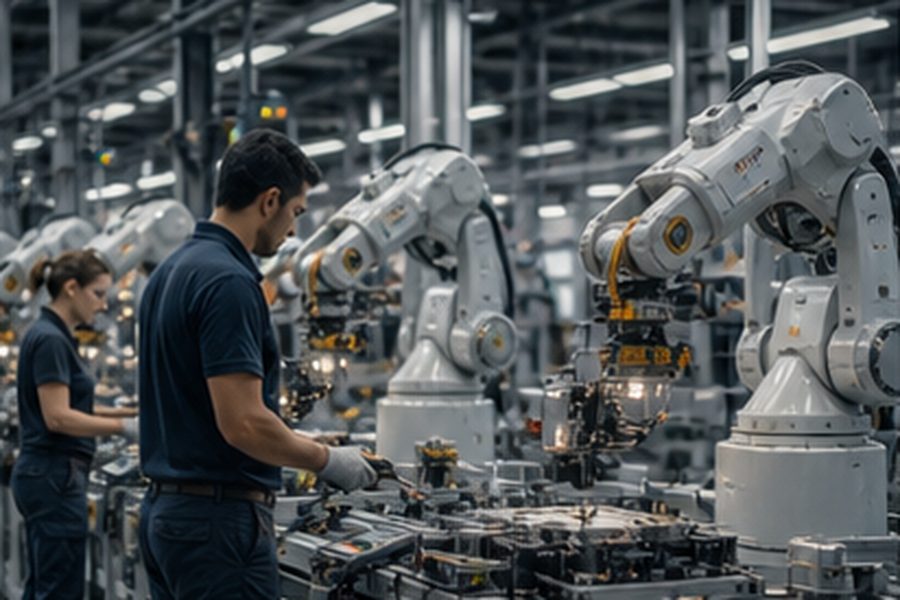
A growing number of mid-size consumer goods brands are turning to co-manufacturing agreements to scale production without committing to expensive capital expenditure. Instead of building or buying factories, these brands are contracting with established manufacturers that have underutilised production lines. The arrangement gives the brand access to capacity, technical expertise and supply chain infrastructure, while the manufacturer fills idle time and improves plant utilisation.
This strategy guide examines how co-manufacturing works in practice, why it is gaining traction, who benefits and what risks remain. It is written for founders, operators and investors evaluating whether co-manufacturing fits their growth plans.
What Co-Manufacturing Is and Is Not
Co-manufacturing, sometimes called contract manufacturing or toll manufacturing, is a production arrangement in which one company (the co-manufacturer) produces goods for another company (the brand owner) under the brand owner’s specifications. The brand retains ownership of the formulation, recipe or design, and often of the raw materials. The co-manufacturer provides the labour, equipment, facility and quality control systems.

This differs from traditional outsourcing in that the relationship is typically longer-term and more collaborative. It differs from licensing, where the manufacturer may also own the brand. And it differs from private labelling, where the manufacturer often owns the formulation and the brand simply applies its label.
For mid-size brands, co-manufacturing offers a path to scale without the fixed costs of a factory. For manufacturers, it offers a way to monetise spare capacity that would otherwise sit idle.
Why Excess Factory Capacity Exists
Manufacturing capacity is lumpy. Factories are built to handle peak demand, seasonal surges or anticipated growth. When demand softens, a product line changes or a major customer leaves, capacity goes unused. According to industry estimates, average utilisation rates in food, beverage and consumer packaged goods manufacturing often sit between 60% and 80%, depending on the sector and region. That spare capacity represents a sunk cost that manufacturers would prefer to monetise.
Co-manufacturing allows manufacturers to sell that capacity at a margin that covers variable costs and contributes to fixed overhead, without requiring new capital investment from the brand.
How Mid-Size Brands Are Using Co-Manufacturing
Mid-size brands typically lack the volume to justify a dedicated factory but have outgrown the ability to produce everything in-house or through small-scale copackers. Co-manufacturing fills this gap. Common use cases include:
- New product launches. Brands can test a new SKU without committing to a production line. If the product fails, the brand walks away with minimal sunk cost.
- Geographic expansion. A brand based in one region can contract with a co-manufacturer in another region to reduce freight costs and improve delivery times.
- Seasonal spikes. Brands with seasonal demand can use co-manufacturing to handle peak periods without building capacity that sits idle for the rest of the year.
- Category extension. A brand moving into a new category, such as a beverage company launching a snack line, can use a co-manufacturer with existing expertise rather than building capability from scratch.
Commercial Impact: Cost Structure and Margins
Co-manufacturing changes the cost structure of a brand. Instead of a large upfront capital outlay, the brand pays a per-unit fee that includes raw materials, labour, overhead and the manufacturer’s margin. This converts a fixed cost into a variable cost, which improves cash flow and reduces financial risk.
However, the per-unit cost is typically higher than it would be if the brand owned the factory and ran it at high utilisation. The trade-off is flexibility. Brands that prioritise speed to market, product variety or geographic reach may find the higher unit cost acceptable.
For manufacturers, co-manufacturing provides incremental revenue with low marginal cost. The key metric is contribution margin per line hour. If the manufacturer can fill idle time at a price above variable cost, every additional unit improves overall profitability.
Risks and Unknowns
Co-manufacturing is not without risk. Brands must evaluate several factors before entering an agreement:
- Quality control. The brand relies on the co-manufacturer’s quality systems. A lapse can damage the brand’s reputation. Contracts should include clear specifications, audit rights and penalty clauses.
- Supply chain dependency. If the co-manufacturer faces a disruption, the brand has no alternative production source unless it maintains a backup arrangement.
- Intellectual property. The brand must protect its formulations, recipes or designs. Non-disclosure agreements and contractual protections are essential.
- Margin compression. As the brand grows, the per-unit cost of co-manufacturing may become a drag on margins compared to owning production. Brands should model the crossover point at which building or buying a factory becomes more economical.
- Capacity availability. The best co-manufacturers may have limited spare capacity. Brands may need to compete for line time, especially during peak seasons.
How to Evaluate a Co-Manufacturing Partner
A structured evaluation process reduces the likelihood of a poor partnership. Key criteria include:
- Technical capability. Does the manufacturer have the equipment, expertise and certifications to produce the brand’s product to specification?
- Capacity fit. Does the manufacturer have the right amount of spare capacity at the right times? A manufacturer with too little capacity may not be able to scale with the brand. One with too much may be desperate for business and less stable.
- Financial health. A co-manufacturer that is struggling financially may cut corners or shut down unexpectedly. Review financial statements or use a third-party credit check.
- Cultural alignment. Co-manufacturing relationships work best when both parties communicate openly and share a commitment to quality and reliability.
- Contract terms. Look for clear terms on pricing, minimum order quantities, lead times, quality standards, intellectual property, termination and dispute resolution.
Why It Matters
For mid-size brands, the choice between owning production and contracting it out is one of the most consequential strategic decisions a leadership team can make. Co-manufacturing offers a way to grow without the capital intensity and operational complexity of factory ownership. In an environment where capital is expensive and supply chains are under pressure, the ability to access production capacity on a variable-cost basis is a significant competitive advantage.
For investors, co-manufacturing changes the risk profile of a brand. A brand that uses co-manufacturing has lower fixed costs, less capital at risk and more flexibility to pivot. These characteristics can make the brand more resilient and more attractive for acquisition.
FY Outlook
Co-manufacturing is likely to become more common as mid-size brands seek capital-efficient growth and manufacturers look to improve utilisation rates. Several trends support this view:
- Rising capital costs. Higher interest rates make factory construction or acquisition more expensive, favouring variable-cost alternatives.
- Supply chain regionalisation. As brands move production closer to end customers, they may use multiple co-manufacturers in different regions rather than one central factory.
- Platform models. A small number of intermediaries are emerging that match brands with co-manufacturers, similar to how AWS matches companies with cloud computing capacity. These platforms could reduce search costs and standardise contracts.
- Sustainability pressures. Co-manufacturing can reduce waste by using existing capacity more efficiently, which aligns with environmental goals.
However, the model is not a panacea. Brands that grow large enough will eventually face a decision about vertical integration. The most successful brands will treat co-manufacturing as a strategic tool, not a permanent solution, and will revisit the make-versus-buy decision regularly.
Conclusion
Co-manufacturing is a practical, capital-efficient way for mid-size brands to access production capacity without the risks of factory ownership. It works best when both parties have aligned incentives, clear contracts and a shared commitment to quality. Brands that evaluate partners carefully, model the cost trade-offs and plan for eventual scale will be best positioned to use co-manufacturing as a genuine growth lever.
For manufacturers, co-manufacturing offers a way to turn idle capacity into revenue. The key is to price the service correctly, maintain high quality standards and build relationships with brands that have growth potential.
In a capital-constrained environment, the ability to grow without spending on fixed assets is a meaningful advantage. Co-manufacturing delivers that advantage, provided the risks are managed and the partnership is structured well.