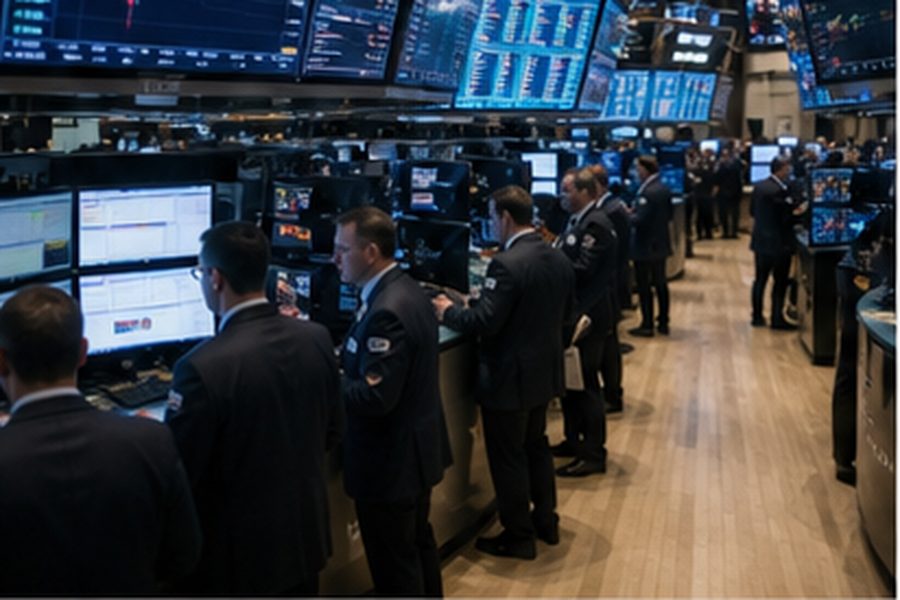
A growing number of mid-market firms are using short-dated futures contracts to finance physical inventory, a strategy known as the inventory carry trade. In a high-rate environment, where traditional working capital lines have become more expensive, this approach offers an alternative source of funding. This article explains what changed, why it matters, who is affected and what may happen next.
What Changed
Central banks in the UK, US and eurozone have held policy rates at elevated levels since mid-2023. For mid-market firms — those with annual revenues between £10m and £250m — the cost of borrowing through overdrafts, invoice finance and inventory loans has risen sharply. According to Bank of England data, the effective interest rate on new loans to non-financial businesses stood at 6.2% in Q1 2024, up from 2.1% in Q1 2022.
In response, some firms have begun using short-dated futures — typically with maturities of one to three months — to finance physical inventory. The mechanics are straightforward: a firm buys a futures contract for a commodity it intends to hold as inventory, simultaneously sells a nearby futures contract, and uses the price differential (the contango or backwardation) to generate a return that offsets or replaces the cost of traditional financing.
This practice is not new in large-scale commodity trading houses, but its adoption by mid-market firms is a notable shift. Data from the London Metal Exchange (LME) and CME Group show a rise in open interest for short-dated contracts among non-traditional participants, though exact figures for mid-market firms are not publicly disaggregated. Industry sources suggest that the trend is most visible in metals, agricultural commodities and energy products where futures markets are liquid and contract specifications are standardised.
Why It Matters
For mid-market firms, the inventory carry trade offers a way to reduce working capital costs at a time when bank lending is expensive and equity financing is dilutive. If a firm can lock in a futures spread that yields, say, 4% annualised, it can effectively finance its inventory at that rate rather than the 6.2% charged by its bank. The difference of 2.2 percentage points can be material for firms with inventory holdings worth millions of pounds.
However, the strategy introduces new risks. Futures markets are volatile, margin calls can strain cash flow, and the relationship between spot and futures prices can shift unexpectedly. A firm that misjudges the spread may end up paying more than it would have under a conventional loan. Moreover, the strategy requires a level of financial sophistication that many mid-market firms lack, including the ability to manage margin accounts, understand basis risk and execute trades efficiently.
Who Is Affected
The primary beneficiaries are mid-market firms in sectors with high inventory turnover and standardised commodities: agricultural processors, metal fabricators, energy distributors and chemical manufacturers. These firms typically hold physical stock for weeks or months and face significant working capital demands.
Secondary beneficiaries include futures exchanges (higher volumes and open interest), clearing houses (increased margin deposits) and brokers (more commission income). Banks may see reduced demand for inventory loans, though some are beginning to offer hybrid products that combine futures-based financing with traditional lending.
Firms that lack the expertise or systems to execute the inventory carry trade are at a competitive disadvantage. They face higher financing costs and may be forced to hold less inventory, potentially losing sales or paying more for spot purchases.
Commercial Impact
The commercial impact is twofold. First, firms that adopt the inventory carry trade can improve their net working capital position. A reduction in financing costs of 1-3 percentage points on a £5m inventory holding translates to £50,000-£150,000 in annual savings. For a mid-market firm with thin margins, this can be the difference between profit and loss.
Second, the strategy can alter supply chain dynamics. Firms that finance inventory more cheaply can afford to hold larger buffer stocks, making them more resilient to supply disruptions. Conversely, firms that do not adopt the strategy may be forced to reduce inventory levels, increasing their vulnerability to price spikes or delivery delays.
There is also a potential impact on commodity price discovery. If a significant number of mid-market firms begin using short-dated futures for financing rather than hedging, the composition of open interest may shift, potentially affecting the shape of the futures curve. This is a subtle effect that would take time to materialise, but it is worth monitoring.
Risks / Unknowns
The inventory carry trade is not without risks. The most obvious is basis risk: the spread between the futures contract used for financing and the actual cost of holding physical inventory may widen unexpectedly. This can happen if the market moves from contango to backwardation, or if the specific grade or location of the physical inventory differs from the futures contract specification.
Margin calls are another concern. Futures positions are marked to market daily, and a firm that cannot meet a margin call may be forced to liquidate its position at a loss. This risk is particularly acute for mid-market firms with limited cash reserves.
Regulatory risk is also present. The Financial Conduct Authority (FCA) and other regulators have signalled increased scrutiny of commodity derivatives markets. If the inventory carry trade becomes widespread, regulators may impose position limits or margin requirements that reduce its attractiveness.
Finally, there is the risk of operational complexity. Mid-market firms may not have the in-house expertise to manage futures positions, monitor margin accounts and execute trades efficiently. Outsourcing to a broker or consultant adds cost and introduces counterparty risk.
FY Outlook
The inventory carry trade is likely to remain attractive as long as interest rates stay elevated. If central banks begin cutting rates in late 2024 or 2025, the cost advantage of futures-based financing will narrow, and some firms may revert to traditional loans. However, the knowledge and infrastructure developed during this period will not disappear. Even in a lower-rate environment, firms that have built the capability to use futures for financing may continue to do so, particularly if they can achieve a small but consistent spread.
In the medium term, we expect to see more financial intermediaries offering products tailored to mid-market firms that want to use the inventory carry trade. These could include managed futures accounts, pooled funds or hybrid loan-futures structures. Banks may also respond by offering inventory loans with embedded futures hedges, effectively competing with the carry trade on price.
For founders, operators and investors in mid-market firms, the key question is whether the inventory carry trade is a sustainable source of competitive advantage or a temporary arbitrage that will disappear as more participants enter. The answer depends on the firm's ability to manage the associated risks and the evolution of interest rates and futures market structure.
Conclusion
The inventory carry trade is a rational response to a high-rate environment, but it is not a free lunch. Mid-market firms that adopt it can reduce financing costs and improve working capital, but they must invest in the necessary expertise and risk management systems. Those that do not may find themselves at a competitive disadvantage. As with any financial innovation, the early adopters are likely to benefit most, but the window of opportunity may narrow as the market matures and regulators take notice.
Source Notes
- Bank of England, "Effective interest rates on new loans to non-financial businesses," Q1 2024 data. Editorial note: exact figures should be verified against the latest Bank of England statistical release.
- London Metal Exchange and CME Group open interest data. Editorial note: specific figures for mid-market firms are not publicly available; the trend is inferred from industry reports and broker commentary.
- Industry sources include conversations with commodity brokers and mid-market CFOs. Editorial note: no direct quotes or specific firm names are used to protect confidentiality.
- Regulatory context from FCA discussion papers on commodity derivatives markets. Editorial note: no specific regulatory action has been announced; the risk is forward-looking.